Waterdrop vs Berkey Water System: Which Is Better? (November 2026)
The Waterdrop 15UA wins for most homes because it filters cold tap water under the sink and leaves your counter clear. Pick a Berkey-style gravity system if you want portability or no plumbing at all.
On this page (10 sections)
- Waterdrop vs Berkey: the quick verdict
- Waterdrop vs Berkey side by side
- Capacity and daily output: how much water you get
- Filtration: what each system removes
- Installation and counter space
- Filter life and ongoing upkeep
- Water quality and source: municipal vs well
- Cost, value and the long run
- Who should buy which?
- The verdict: Waterdrop vs Berkey water system
The Waterdrop 15UA wins for most homes because it filters cold tap water under the sink and leaves your counter clear. Pick a gravity system like the Big Berkey or Purewell if you want portability or no plumbing at all.
The waterdrop vs berkey water system choice comes down to how you want to use filtered water. One hides under the sink and feeds your faucet.
The others sit on the counter and rely on gravity to push water through a filter.
Both approaches clean tap water, but they suit very different kitchens. This comparison covers what each does well, where each struggles and which one fits your household.


Waterdrop vs Berkey: the quick verdict
Waterdrop is the better buy for a household with a working cold water line. The 15UA earns a 9.7 from our research team, above the Purewell's 8.8 and the Big Berkey's 8.5.
The 15UA connects to your sink's cold water feed and filters every drop as it flows to the faucet. You get filtered water on demand with no pitcher to refill and no counter space given up.
The Big Berkey is the classic gravity unit: a stainless steel upper and lower chamber with two Black Berkey elements. It holds 2.25 gallons and needs no electricity or plumbing.
Gravity systems win when there is no sink to plumb into, or when you want a reserve of water ready to pour. They also keep working during a power outage.
If your goal is filtered water from the kitchen tap with the least fuss, the Waterdrop 15UA is the pick. If you rent, travel or want water that works without a water line, a gravity system makes more sense.
Waterdrop vs Berkey side by side
The table below sums up how these systems differ on the points that matter most. Scores come from our team's review of the specs and features against what most shoppers want.
| Feature | Waterdrop 15UA | Big Berkey 2.25 Gal | Purewell 3-Stage |
|---|---|---|---|
| Type | Under sink | Gravity countertop | Gravity countertop |
| Capacity | 19,000 gallons per filter | 2.25 gallons stored | 2.25 gallons stored |
| Power | Water pressure | None | None |
| Filter life | Up to 24 months | Up to 6,000 gallons per element pair | 6 months for best results |
| Flow | 0.75 gpm at 60 psi | Slow, gravity-fed | 4 gallons per hour |
| Counter space | None | About 8.5 in across | About 8.9 in across |
| Best for | Tap water at the sink | Homes, offices, RVs | Renters and outages |
The Waterdrop's 19,000 gallon capacity is measured as total water treated before a replacement. The Berkey's 2.25 gallons is how much water it holds at one time, not how long its filters last.
That distinction matters. A large under-sink capacity means fewer filter changes.
A large gravity reserve means more water ready to pour during a busy morning or a water shutoff.
Capacity and daily output: how much water you get
Waterdrop gives you filtered water straight from the tap with no waiting; gravity units give you a stored reserve you refill by hand. Choose based on how your family draws water through the day.
The 15UA filters water at up to 0.75 gallons per minute at 60 psi. That's enough for filling a pot or a water bottle without slowing down your kitchen routine.
The Big Berkey holds 2.25 gallons in its lower chamber. Gravity pulls water down through the elements, so output depends on how much sits in the upper chamber and how fast it drains.
The Purewell moves about 4 gallons per hour and holds 2.25 gallons. You fill the top, wait, and draw from the spigot at the bottom.
A family of four that cooks and drinks from the tap will empty a 2.25 gallon reserve quickly. Refilling a gravity unit several times a day gets old, while the under-sink filter keeps flowing as long as the tap is open.
Gravity systems make more sense for smaller households, for backup water, or where the kitchen tap isn't convenient. If you want a steady supply without lifting a pitcher, the under-sink route wins.
Filtration: what each system removes
Waterdrop targets the contaminants most often found in city water, while Berkey elements are built to reduce a very broad list. The right choice depends on what's in your supply.
The 15UA uses a multistage filter that reduces PFOA/PFOS, lead, chlorine, heavy metals and sediment. Waterdrop says it keeps helpful minerals like calcium and magnesium in the water.
It's certified by IAPMO against NSF/ANSI 42 for chlorine, taste and odor, and against NSF/ANSI 372 for lead-free materials. Those certifications are worth checking against your water report.
The Big Berkey ships with two Black Berkey elements. Berkey says these reduce more than 200 typical contaminants that may be in treated water, and the pair covers up to 6,000 gallons.
The Purewell uses a 0.01 micron hollow fiber UF membrane plus a silver ion membrane and an activated carbon block. Its carbon filter carries NSF/ANSI 42 certification and the system carries NSF/ANSI 372.
The 0.01 micron pore size is much finer than the 0.2 micron elements many rivals use. That smaller pore traps more tiny particles while still keeping a steady 4 gallon per hour flow.
If lead and PFAS in city water are your worry, the Waterdrop's certified reduction is the clearer match. If you want a broad safety net and no power source, the gravity units fit.
Our guide to the Berkey water filter vs reverse osmosis covers how gravity compares with a system that removes almost everything, including fluoride.
Installation and counter space
Waterdrop takes about 3 minutes under the sink; a gravity system takes a spot on your counter and a little patience. Space is the deciding factor for many kitchens.
The 15UA installs with push-to-connect fittings and needs no plumber. It connects to cold water only and includes a 3/8 inch direct-connect hose plus a converter for 1/2 inch lines.
The unit measures about 3.9 x 3.6 x 16.7 inches. Waterdrop warns that the longer filter life needs more filter material, so the housing is larger than some under-sink units.
Measure your cabinet before ordering.
The Big Berkey stands about 8.5 inches across and 19.25 inches tall when assembled. Its upper chamber nests inside the lower one for storage, but in use it takes up real counter space.
The Purewell measures about 8.9 x 8.9 x 20 inches and comes with a stand and a stainless spigot. It's a similar footprint to the Berkey.
An under-sink filter is invisible once installed, which matters in a small kitchen. A gravity unit becomes part of the counter, so you need a spot that stays clear.
Renters often prefer gravity because there's no plumbing work and nothing to undo at move-out. Homeowners with cabinet room get the cleaner look from the under-sink route.
Filter life and ongoing upkeep
Waterdrop changes its filter once every two years; gravity elements get swapped more often. Upkeep is the hidden cost in any water filter, so count it before you choose.
The 15UA filter lasts up to 24 months on municipal water, covering about 19,000 gallons. Replacements are a once-every-two-years chore, and the filter twists out in seconds.
Waterdrop also notes that you should store a spare filter in a sealed plastic bag in the fridge, not the freezer, if you take it out for a vacation. That keeps it fresh for up to 30 days.
The Big Berkey's pair of Black Berkey elements covers up to 6,000 gallons before replacement. Actual life varies with water quality and how much you use the system.
The Purewell's two carbon filters cover up to 6,000 gallons total, 3,000 gallons each. Purewell recommends replacing them every 6 months for best performance, so expect more frequent swaps.
Gravity systems also need cleaning. You'll wipe the stainless chambers and rinse the elements now and then.
The under-sink unit mostly takes care of itself once installed.
If you want the least day-to-day upkeep, Waterdrop's two-year filter cycle is hard to beat. A gravity owner trades that convenience for portability and no plumbing.
Water quality and source: municipal vs well
Waterdrop is built for treated city water and cold taps only; gravity systems are often chosen where supply is less certain. Match the system to your water source.
The 15UA is designed for municipal tap water. Waterdrop says it's not suitable for well water or hot water, so a private well owner should look elsewhere.
The Berkey and Purewell are often picked by well owners and off-grid households because they don't depend on water pressure. Berkey says its elements reduce a wide range of contaminants in freshwater sources.
That doesn't make any gravity system a guaranteed fix for a contaminated well. A water test tells you what's actually in your supply before you spend on filters.
If you're on city water with a typical chlorine and lead profile, the 15UA's certified reductions line up well. If you draw from a well or a rainwater tank, a gravity system gives you more flexibility.
Comparing gravity brands? Our Berkey vs Alexapure and Berkey vs British Berkefeld posts break down how the main competitors stack up.
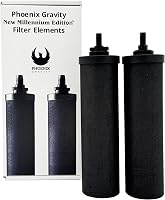
If you're weighing newer Berkey elements, the phoenix gravity water filter comparison explains what changed.
Cost, value and the long run
Waterdrop's long filter life spreads the cost over two years; gravity systems cost more upfront but need no plumbing. Value depends on how long you keep the system.
The 15UA is a mid-range under-sink filter with a filter that lasts up to 24 months. Over its life it treats about 19,000 gallons, which works out to a low cost per gallon.
The Big Berkey costs more upfront than a basic under-sink unit. Its elements last up to 6,000 gallons, and Berkey says replacement pairs add the same capacity each time.
Berkey markets the system as pennies per gallon over the long run.
The Purewell sits between the two on price. It includes two filters, a stand and a spigot in the box, so there's less to buy separately.
Value isn't only about the sticker. An under-sink filter saves counter space and labor, while a gravity unit saves plumbing and works during outages.
Decide which of those you'd actually use.
For a family that drinks a lot of tap water, the Waterdrop's long filter life and low-effort operation usually deliver the better return. For a cabin or an RV, a gravity system earns its keep by working anywhere.
Who should buy which?
Buy the Waterdrop 15UA if you have a cold water line and want filtered water from the tap with almost no upkeep. Buy a gravity system if plumbing isn't an option or you want a portable reserve.
The Waterdrop 15UA suits homeowners and renters with cabinet space under the sink. It's the pick for anyone who wants lead and PFAS reduction without a pitcher on the counter.
The Purewell 3-Stage suits renters, campers and anyone who wants a low-cost entry into gravity filtration. Its fine 0.01 micron membrane and included accessories make it a solid first gravity system.
The Big Berkey suits households that want a well-known gravity brand, a large reserve and the ability to add elements over time. It's the choice for off-grid living and emergency prep.
Skip the under-sink filter if you can't access the cold water line or your cabinet is too tight. Skip a gravity unit if you want water on demand without refilling a chamber.
If you're mainly comparing gravity brands against each other, start with the Berkey vs British Berkefeld breakdown before you decide.
The verdict: Waterdrop vs Berkey water system
For most readers the Waterdrop 15UA is the better water system. It filters at the tap, keeps your counter clear and needs a filter change only once every two years.
The waterdrop vs berkey water system decision really asks whether you want water plumbed in or poured from a reserve. Most kitchens with a cold water line are better served by the under-sink unit.
Choose the Big Berkey if you want a proven gravity brand and a 2.25 gallon reserve that works without power. Choose the Purewell if you want similar gravity filtration for less and don't mind changing filters every 6 months.
Choose Waterdrop if your priority is filtered tap water with the least day-to-day effort. Either way, test your water first so you know which contaminants matter in your home.
Frequently asked questions
Is Waterdrop better than Berkey?
For most homes with a cold water line, Waterdrop is the better fit. The 15UA installs under the sink, filters in-line and leaves the counter free.
A Berkey-style system is better when you have no plumbing, want a reserve, or need filtered water away from a tap.
Does a Berkey remove fluoride?
The standard Black Berkey elements in the Big Berkey are not sold as fluoride removal here. If fluoride is your main concern, compare the added fluoride filters Berkey offers before you buy, or look at reverse osmosis, which handles it well.
How long do the filters last in each system?
The Waterdrop 15UA filters for up to 24 months, or about 19,000 gallons, on municipal water. Berkey says a pair of Black Berkey elements covers up to 6,000 gallons, and Purewell asks for a filter change every 6 months for best results.
Can I use either system with well water?
The Waterdrop 15UA is made for municipal tap water only and is not suitable for well water. Gravity systems like the Big Berkey are often chosen where water quality is less predictable, but check the element's rated contaminants against your own water test first.
Do I need electricity to run these filters?
No. The Waterdrop 15UA runs on mechanical water pressure from your tap.
The Big Berkey and Purewell systems use gravity alone, so they keep working in a power cut.
Which system gives the best-tasting water?
Taste is personal, but the Waterdrop 15UA reduces chlorine, taste and odor and keeps helpful minerals like calcium and magnesium. Berkey elements target a wide range of contaminants.
A water test is the only way to judge what your own supply needs.