Berkey Water Filter vs Reverse Osmosis: Which Is Better? (November 2026)
Choose reverse osmosis for the widest contaminant reduction, including PFAS and lead, and choose Berkey for mineral-rich water without electricity or plumbing. In this berkey water filter vs reverse osmosis comparison, your water quality and kitchen setup decide the winner.
On this page (8 sections)
- Which system wins the Berkey water filter vs reverse osmosis matchup?
- Berkey and reverse osmosis side by side
- What decides the choice: contaminants or minerals?
- Which system fits your kitchen and living space?
- How do filter costs and upkeep compare?
- Which gives better-tasting drinking water?
- Who should buy which system?
- The verdict on Berkey vs reverse osmosis
Choose reverse osmosis for the widest contaminant reduction, including PFAS and lead, and choose Berkey for mineral-rich water without electricity or plumbing. In this berkey water filter vs reverse osmosis comparison, your water quality and kitchen setup decide the winner.
Reverse osmosis pushes water through a membrane under pressure. Gravity filters like the Big Berkey let water drip through carbon elements.
That mechanical difference drives every other trade-off here.
Which system wins the Berkey water filter vs reverse osmosis matchup?
The iSpring RCC7AK-BN wins overall for most homes because its whole system is NSF/ANSI 58 certified and it removes more contaminants. The Big Berkey wins when you cannot or will not use plumbing and power.
The iSpring's NSF/ANSI 58 certification covers the full system, not just one component. Its six stages reduce TDS by 93–98%, PFAS by 96–99%, lead by more than 98.9% and fluoride by more than 97.4%.
The Big Berkey's strength is simplicity. Its two Black Berkey BB9-2 elements sit in a 2.25-gallon stainless steel body.
Gravity does the work, so there is no pump and no drain line.
If you know your water carries PFAS, lead or fluoride, reverse osmosis is the safer pick. If your water is already treated and tastes off, the Berkey fixes taste with far less setup.
The Berkey's footprint helps it win on flexibility. Its body is polished AISI 304 stainless steel and measures roughly 8.5 inches in diameter by 19.25 inches tall when assembled.
The upper chamber nests inside the lower one when taken apart, so it stores in a cabinet or packs into an RV bay between trips.
The iSpring operates without electricity because it is driven by line pressure. The Berkey needs no power at all.
The Berkey's priming routine is part of setup. You prime the Black Berkey elements, install them in the upper chamber and fill with tap water.
Gravity then moves water through the elements into the lower chamber. No plumbing, permanent installation or specialized tools are typically required.
Berkey and reverse osmosis side by side
The two systems differ most in what they remove and what they need from your kitchen. This table lines up the specs that matter for the buying decision.
| Feature | iSpring RCC7AK-BN | Big Berkey 2.25 Gallon |
|---|---|---|
| Filtration type | 6-stage reverse osmosis with alkaline stage | Gravity-fed carbon elements |
| Certification | NSF/ANSI 58 full system | Berkey proprietary media |
| Contaminant focus | PFAS, lead, fluoride, TDS and 1,000+ others | Broad range of typical contaminants, taste and odor |
| Minerals | Removed by the membrane, partly restored by the AK stage | Left in the water |
| Power and plumbing | Water line, no electricity needed | None needed |
| Capacity | 75 gallons per day | 2.25 gallons in the tank |
| Footprint | Under-sink cabinet | Countertop, about 8.5 in wide and 19.25 in tall |
| Filter life | 6-month to 3-year staged replacements | Up to 6,000 gallons per pair |
| Product | Best for | Filtration | Capacity | Power | Our score |
|---|---|---|---|---|---|
| iSpring RCC7AK-BN NSF Certified | the widest contaminant reduction | 6-stage RO | 75 gallons per day | 9.6 | |
| Big Berkey 2.25 Gallon | no electricity or plumbing | Gravity-fed carbon elements | 2.25 gallons | None needed | 8.5 |
What decides the choice: contaminants or minerals?
The first question is what you need removed. Reverse osmosis removes more, while Berkey leaves minerals in place.
Match the system to the water coming out of your tap.
The iSpring's RO membrane reduces a long list of contaminants, and the alkaline AK stage then adds minerals back and balances pH.
NSF testing backs the reduction numbers for the full system.
A Black Berkey element uses a proprietary blend of media. Berkey says it removes or dramatically reduces over 200 typical contaminants.
That covers taste and odor well, but it is not the same depth of removal as a certified RO membrane.
If your water report lists PFAS or high fluoride, the iSpring is the clear answer. If your water is municipally treated and the main complaint is chlorine taste, either system fixes it.
The Berkey does it without a drain or pump.
If you are weighing membrane filters against heat-based purification, our comparison of water distiller vs reverse osmosis covers what distillation removes and costs.
Which system fits your kitchen and living space?
Reverse osmosis takes under-sink cabinet room and a water line; it needs no electricity. The Big Berkey takes counter space and no utilities at all.
Space decides as much as water quality does.
The iSpring measures 15.5 x 16 x 18 inches and weighs 12.5 kg. It includes a storage tank, a brushed nickel faucet and an extra tool set.
The top-mounted fastener lets you install the whole unit from above the counter, which helps in a tight cabinet.
The Big Berkey measures about 8.5 inches in diameter and 19.25 inches tall on the counter. Its upper chamber nests inside the lower one when disassembled.
That makes it easy to store or pack for an RV.
When the under-sink route works
Pick reverse osmosis if you have a free cabinet and room for the storage tank. The iSpring needs no electricity at all, since it runs on line pressure.
Its push-to-connect fittings and color-coded tubing simplify the install.
The kit's convertible water adapter fits both 1/2-inch NPT and 3/8-inch compression fittings. That versatility matters in older homes where the under-sink plumbing is not standard.
The unit also ships with a storage tank and an extra tool set, so you are not hunting for fittings mid-install.
If you are weighing a gravity pitcher against a plumbed system first, our guide to how much a Berkey water filter costs covers the budget side.
When the countertop route works
Pick the Berkey if you rent, move often or camp. There is nothing to wire and nothing to plumb.
Fill the top chamber and let it drip.
The trade-off is time and tank size. You get 2.25 gallons at a time and a flow rate of about 0.03 gallons per minute.
A family filling bottles all day will refill more often than with a plumbed RO system.
The Berkey's body also nests for storage, so it takes up less space between uses than a fixed under-sink system. For a renter who moves every year or two, that matters more than daily flow rate.
If you want a smaller countertop unit with a similar no-power approach, our roundup of the best ceramic gravity water filters covers compact options.
How do filter costs and upkeep compare?
Both systems cost little per gallon over time, but reverse osmosis has more staged replacements and a wastewater stream. Berkey upkeep is simpler but less frequent.
iSpring sets filter changes at 6 months for the F4AK set, 1 year for the F9K, 2 years for the F19K75 and 3 years for the F28K75. The transparent first-stage housing lets you see sediment buildup so you know when to swap it.
The Big Berkey's two elements last up to 6,000 gallons before replacement is recommended. Berkey sells extra pairs that each add another 6,000 gallons of capacity.
Actual life depends on your water quality and daily use.
Reverse osmosis also sends concentrate water to the drain. That is the hidden running cost.
Gravity filters pass water once with no waste stream.
The maintenance calendar in practice
The iSpring's maintenance is spread across four replacement intervals. The 6-month F4AK set covers the sediment and carbon pre-filters that protect the membrane.
The 1-year F9K and the 2-year and 3-year sets handle the later stages and the AK filter.
That schedule is more complex than the Berkey's. On the Berkey you replace the element pair when it reaches the end of its rated life, and the only regular chore is filling the top chamber and occasionally cleaning the stainless chambers.
The iSpring's transparent housing earns its keep here. Seeing sediment color tells you when the first stage is loading up, so you are not changing filters blind.
The Berkey offers no equivalent window into element wear, so you track gallons used instead.
Which gives better-tasting drinking water?
Both improve taste, but they get there differently. Reverse osmosis strips almost everything, then the AK stage adds minerals back.
The Berkey leaves minerals in place while reducing taste and odor compounds.
People who dislike flat-tasting RO water often prefer a remineralizing stage. The iSpring's patent-pending natural mineral AK stage is designed to deliver balanced pH and essential minerals.
The Big Berkey needs no remineralization because it never removes them.
If you want spring-like water from a faucet, the iSpring's alkaline output is the closer match. If you want the simplest path to better-tasting water without plumbing, the Berkey is easier.
The Berkey's edge is flavor consistency. Because it does not strip dissolved solids, the water keeps the mineral character of your source.
The iSpring's output depends on how well the AK stage is topped up, so a spent alkaline filter changes the taste.
Who should buy which system?
Buy the iSpring RCC7AK-BN if your water report shows PFAS, lead or fluoride and you have under-sink space. Buy the Big Berkey if you need water filtration with no power, no plumbing and no drain.
The iSpring suits homeowners who want a permanent kitchen upgrade. It also suits anyone replacing bottled water for a family.
The 75-gallon daily capacity covers drinking, cooking and ice makers with an optional kit.
The unit's ice maker kit, sold separately as the ICEK, connects the system to a fridge. That turns the RO output into filtered ice and chilled water, which is the main reason a plumbed system beats a pitcher or gravity unit for daily household volume.
The Big Berkey suits renters, RV owners, cabin users and anyone in an area with boil-water notices or unreliable supply. Its stainless steel body and gravity feed keep it working when the power does not.
Berkey's own guidance puts the Big Berkey at roughly 1 to 4 people for everyday drinking water. The 2.25-gallon tank fits that household size well.
A larger family will be refilling it more than once a day.
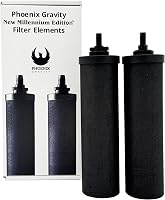
If you are comparing Berkey models before you commit, our look at the phoenix gravity water filter versus Black Elements explains what changed in the newer line.
The verdict on Berkey vs reverse osmosis
Reverse osmosis wins for most households because it removes more contaminants and is certified as a full system. The Big Berkey wins for off-grid, rental and emergency use where utilities are not guaranteed.
Go with the iSpring RCC7AK-BN if water safety is your top concern. Its NSF/ANSI 58 certification covers the whole system and its six stages target PFAS, lead, fluoride and over 1,000 other contaminants.
The alkaline stage keeps the water from tasting flat.
Go with the Big Berkey if you want good-tasting water without electricity or plumbing. Its 2.25-gallon tank and two BB9-2 elements fit countertops, RVs and cabins.
You give up deep contaminant removal and fast flow, and you gain independence from utilities.
That is the heart of the berkey water filter vs reverse osmosis decision. Pick the certified membrane system for maximum removal, or the gravity filter for maximum flexibility.
Frequently asked questions
Does a Berkey remove fluoride like reverse osmosis does?
Reverse osmosis removes fluoride well. The iSpring RCC7AK-BN reduces fluoride by more than 97.4% according to its NSF/ANSI 58 certification.
A standard Black Berkey element is not built to remove fluoride, so RO is the better fit if fluoride is your main concern.
Does reverse osmosis remove healthy minerals?
Yes, a standard RO membrane strips most dissolved minerals along with contaminants. The iSpring RCC7AK-BN adds an alkaline stage that puts minerals and pH back into the water.
Berkey gravity filters leave minerals in the water from the start.
Can I use a Berkey without electricity or plumbing?
Yes. The Big Berkey runs on gravity alone, so you fill the top chamber and water drips through the filters into the lower chamber.
It works in an apartment, RV or cabin.
Reverse osmosis needs a water line, and the featured iSpring model needs no electricity.
Which system wastes more water, Berkey or reverse osmosis?
Reverse osmosis sends some water to the drain as concentrate, so it uses more supply water than a gravity filter. Berkey filters pass water through once with no wastewater stream.
RO wastewater ratios vary by model and water pressure.
How often do I change filters on each system?
The iSpring RCC7AK-BN uses staged filter changes set at 6-month, 1-year, 2-year and 3-year intervals. Berkey recommends replacing the Black Berkey elements after about 6,000 gallons.
Actual life depends on your water quality and daily use.