10 Best Countertop Water Purifiers (October 2026)
The best countertop water purifiers include the DREO 3:1 Countertop RO for busy households, the Ninja HydraSense Water Filter for mineral retention, and the AquaTru Classic Countertop RO for named RO standards.
On this page (6 sections)
- How we chose these countertop water purifiers
- Which countertop water purifier fits your routine?
- How do you choose the best countertop water purifier?
- How should you set up and care for a countertop purifier?
- What common countertop purifier mistakes should you avoid?
- Which countertop water purifier should you choose?
The DREO 3:1 Countertop RO is our best countertop water purifier pick for most kitchens because it combines reverse osmosis with a stated 3:1 pure-to-drain ratio, TDS display and two autofill pitchers. Choose Ninja HydraSense or Aquasana if you prefer carbon filtration that retains natural minerals.
Countertop purifiers vary in how they treat water and how they fit into a kitchen routine. Reverse osmosis systems focus on reducing dissolved solids, while carbon systems such as Ninja HydraSense and Aquasana retain naturally occurring minerals.
Our picks at a glance
-
1

-
2

-
3

- 4
 Best for glass-carafe fansCheck it
- 5
 Check it
SimPure Y7P-BW UV Countertop RO
Best for UV plus RO - 6
 Check it
Aquasana Countertop Water Filter
Best for quick carbon dispensing - 7
 Best for mineralized ROCheck it
- 8
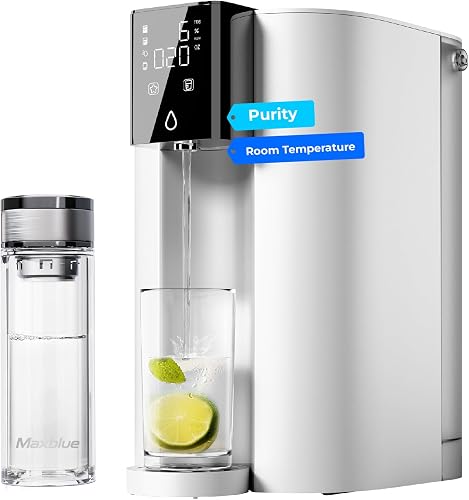 Best for fridge-ready waterCheck it
- 9
 Best for added mineralsCheck it
- 10
 Best for tight countersCheck it
How we chose these countertop water purifiers
We compared each purifier's filtration method, stated certifications or reduction claims, dispensing setup, filter guidance and space needs. The picks cover reverse osmosis systems with different tanks and pitchers, plus carbon options for buyers who want to retain minerals.
A countertop purifier needs a suitable spot, a nearby outlet and a routine that works for you. Measure the width, depth and height available, then consider how often you'll refill feed tanks or replace filters.
For a broader look at countertop setups and filter styles, see our plain guide to countertop water filter systems. If you're comparing RO with another purification method, our water distiller vs reverse osmosis guide explains the practical differences.
| Product | Best for | Filtration | Capacity | Size | Our score |
|---|---|---|---|---|---|
| DREO 3:1 Countertop RO | busy households | Reverse osmosis | 5 L | 15.7 x 6.7 x 13.4 in | 9.0 |
| Ninja HydraSense Water Filter | mineral retention | Specialized ultrafine carbon paper | 96 oz reservoir | 14.37 x 5.07 x 13.78 in | 8.7 |
| AquaTru Classic Countertop RO | named RO standards | Reverse osmosis | 2.7 L | 14 x 12 x 14 in | 8.6 |
| Bluevua RO100ROPOT | glass-carafe fans | Five-stage reverse osmosis with remineralization | 12 L | 10.9 x 15.4 x 14.3 in | 8.5 |
| SimPure Y7P-BW UV Countertop RO | UV plus RO | Reverse osmosis with UV purification | 528 gallons stated filter capacity | 17.3 x 7.5 x 17 in | 8.4 |
| Aquasana Countertop Water Filter | quick carbon dispensing | Carbon block and ion exchange | 300 gallons per filter | 9.69 x 7.96 x 11.61 in | 8.1 |
| SimPure Y9A UV Alkaline RO | mineralized RO | Reverse osmosis with UV and remineralization | 300 gallons per day stated production | 16 x 9.3 x 14.3 in | 8.0 |
| Waterdrop C1S Countertop RO | fridge-ready water | Reverse osmosis | 34 oz portable tank | 11.7 x 8.3 x 13.7 in | 7.7 |
| AquaTru Classic Alkaline | added minerals | Reverse osmosis with mineral addition | 2.7 L | 14 x 12 x 14 in | 7.7 |
| Philips Slim Countertop RO | tight counters | Reverse osmosis | 16.9 oz bottle | 12.83 x 4.44 x 13.86 in | 7.5 |
Which countertop water purifier fits your routine?
DREO leads this group for its dispensing features and stated water efficiency, while the other picks suit different preferences for filtration, carafes, mineral retention and counter space. Use each profile to find the system that fits the way you store, pour and maintain drinking water.
DREO 3:1 Countertop RO: Best for busy households
- 3:1 pure-to-drain ratio
- TDS and filter-life display
- Two autofill pitchers
- 5 L capacity
Two autofill pitchers and a 3:1 pure-to-drain ratio make DREO a flexible RO choice for everyday dispensing. It also has a built-in TDS meter and filter-change indicator.
Pros
- 3:1 pure-to-drain ratio
- Two autofill pitchers
- TDS and filter-life display
Cons
- 10.8 lb unit
- Requires a power outlet
DREO's countertop RO system has a 3:1 pure-to-drain ratio and two autofill pitchers. It also has a built-in TDS meter and filter-change indicator.
DREO says the 7-in-1 system filters out 99.9% of possible contaminants, including PFOA, PFOS, chlorine and fluoride. The brand says it was tested by SGS against NSF/ANSI 58.
The 5 L capacity gives you stored water in addition to the two pitchers. The unit measures 15.7 x 6.7 x 13.4 in and needs an electrical outlet.
Choose DREO if you want RO filtration with pitchers ready to serve. Skip it if you don't have counter space for the unit or prefer a filter that retains natural minerals without reducing TDS.
Ninja HydraSense Water Filter: Best for mineral retention
- Reduces 80+ contaminants
- Retains natural minerals
- 96 oz reservoir
- No installation
Ninja says HydraSense reduces 80+ contaminants while preserving natural minerals. Its touchscreen tracks water use and filter status, and one-touch dispensing lets you set a fill volume.
Pros
- No plumbing or installation
- Real-time usage and filter tracking
- Chill water with ice or refrigeration
Cons
- Uses a corded base
- The stated filter life is 120 gallons or 6 months
Ninja HydraSense suits buyers who want carbon filtration that retains natural minerals. Ninja says it reduces 80+ contaminants, including PFAS, microplastics, carcinogens and pharmaceuticals, and is independently certified by IAPMO R&T to NSF/ANSI 42, 53 and 401.
Its 96 oz reservoir means fewer refills than a small pitcher. One-touch dispensing lets you set a volume, and the touchscreen tracks usage and filter status.
Ninja states that the filter lasts 120 gallons or 6 months, with two replacements per year. The system needs a power outlet, and you can add ice to the reservoir or store it in the fridge for cold water.
Choose HydraSense if you want a larger reservoir, usage tracking and a mineral-retaining carbon filter. Skip it if reducing TDS is your main goal, since this system does not reduce TDS.
AquaTru Classic Countertop RO: Best for named RO standards
- IAPMO tested and certified to named NSF/ANSI standards
- No plumbing required
- 2.7 L capacity
- Quick-twist filter changes
AquaTru says its Classic is certified to NSF/ANSI standards 41, 53, 58, 401 and P473 for 84 contaminants. The countertop unit needs no plumbing and has quick-twist replacement filters.
Pros
- Named standards and 84 contaminants
- No plumbing required
- Twist-and-change filters
Cons
- 22.8 lb unit
- The stated capacity is 2.7 L
AquaTru Classic is a countertop RO option with a named set of certifications. AquaTru says IAPMO tested and certified it to NSF/ANSI standards 41, 53, 58, 401 and P473 for 84 contaminants.
Its 2.7 L capacity and 14 x 12 x 14 in footprint call for a dedicated counter spot. It needs no plumbing, and its filters use a quick-twist design for replacement.
AquaTru says its filters last from 6 months to 2 years, depending on the filter, and that one set replaces 4,500 plastic water bottles. Check the care instructions for the filter set you use.
Choose the Classic if you want a no-plumbing RO setup and named standards. Skip it if you need a light unit you can move often, since it weighs 22.8 lb.
The AquaTru Classic vs Carafe comparison can help if you're deciding between AquaTru formats.
Bluevua RO100ROPOT: Best for glass-carafe fans
- Borosilicate glass carafe
- 2:1 pure-to-drain ratio
- Five-stage RO
- Filter-life monitor
A borosilicate glass carafe sets Bluevua apart from dispenser-style RO units. Its five-stage system includes remineralization, while the display tracks filter service life and water quality.
Pros
- Glass carafe
- 2:1 pure-to-drain ratio
- Power-saving standby mode
Cons
- 5 kg unit
- Requires a power source
Bluevua suits buyers who want a glass carafe instead of a plastic dispenser. Its borosilicate glass carafe pairs with five-stage RO filtration and a remineralization filter.
The system has a 2:1 pure-to-drain ratio and a display for filter service life and water quality. Bluevua says the filters last 12–24 months.
The product has a 12 L capacity, while the included glass carafe is a separate component. The unit measures 10.9 x 15.4 x 14.3 in and needs a power source.
Choose Bluevua if you prefer a glass serving vessel and remineralized RO water. Skip it if your priority is the highest stated pure-to-drain ratio in this group.
For a closer look at another countertop RO comparison, see our Bluevua vs DREO guide.
SimPure Y7P-BW UV Countertop RO: Best for UV plus RO
- UV and four-stage RO filtration
- 4:1 pure-to-drain ratio
- No installation
- Room-temperature dispensing
SimPure combines UV purification with four-stage RO filtration and states a 4:1 pure-to-drain ratio. It dispenses room-temperature water and comes with a pre-installed filter.
Pros
- UV plus RO
- 4:1 pure-to-drain ratio
- No plumbing required
Cons
- Room-temperature water only
- 17 in tall
SimPure Y7P-BW combines UV purification with reverse osmosis in a plug-in countertop unit. SimPure says the system was tested by SGS against NSF/ANSI 58 and describes a 4:1 pure-to-drain ratio.
It dispenses room-temperature water only, so it won't provide chilled or hot water. The unit measures 17.3 x 7.5 x 17 in, so check both counter depth and cabinet clearance.
SimPure states that the filter set provides 528 gallons of purified water and includes a pre-installed filter. The brand recommends using water below 500 ppm TDS.
Choose this model if UV plus RO matches your priorities and you have room for a tall unit. Skip it if you expect chilled or hot water from the dispenser.
For a wider comparison of reverse osmosis choices, see our best countertop RO systems.
Aquasana Countertop Water Filter: Best for quick carbon dispensing
- Reduces up to 99% of 78 contaminants
- Retains natural minerals
- No wastewater
- 300-gallon filter
Aquasana's powered carbon and ion-exchange system is designed to fill an 8 oz glass in 8 seconds. It retains naturally occurring minerals and does not reduce TDS.
Pros
- No plumbing required
- Retains natural minerals
- No wastewater
Cons
- Does not reduce TDS
- Filter replacement is recommended every 300 gallons or 6 months
Aquasana's Clean Water Machine suits buyers who want powered carbon filtration and mineral retention. Aquasana says its Claryum technology reduces up to 99% of 78 contaminants while retaining naturally occurring calcium, magnesium and potassium.
The system measures 9.69 x 7.96 x 11.61 in. Aquasana says it can filter an 8 oz glass in 8 seconds, and recommends replacing the filter every 300 gallons or 6 months.
This system does not reduce TDS or produce wastewater. Choose it if quick dispensing and mineral retention matter more to you than reducing dissolved solids.
Skip Aquasana if lowering TDS is your key goal. Read our Aquasana countertop water filter review for a closer look at this carbon system.
SimPure Y9A UV Alkaline RO: Best for mineralized RO
- Six-stage RO
- UV and post-mineralization filter
- Side-mounted tank
- Filter-change indicator lights
The Y9A adds a post-mineralization stage after RO filtration. Its side tank can be refilled without moving the unit away from a wall or cabinet.
Pros
- Side-mounted tank
- Filter replacement indicators
- Built-in flushing function
Cons
- Requires a power outlet
- Routine tank and filter care
SimPure Y9A is an RO system with UV and a post-mineralization filter. Its side-mounted tank can be refilled without moving the unit away from a wall or cabinet, and the transparent design shows the water level.
SimPure says its six-stage filtration reduces TDS by up to 99.88% before mineral addition. The added minerals can raise the final TDS reading, which the brand says is normal for this alkaline model.
The unit measures 16 x 9.3 x 14.3 in and needs 18 in of vertical clearance. Filter indicators show when replacement is needed, with timing varying by filter type.
Choose Y9A if you want RO water with minerals added and an accessible tank. Skip it if you prefer near-zero TDS water without a remineralization stage.
Waterdrop C1S Countertop RO: Best for fridge-ready water
- Six-stage RO filtration
- 3:1 pure-to-drain ratio
- Detachable 34 oz tank
- 12-month composite filter
Waterdrop pairs six-stage RO filtration with a detachable tank that fits in a refrigerator. The system has a touchscreen for TDS display and filter-life monitoring.
Pros
- Detachable tank
- 3:1 pure-to-drain ratio
- No installation required
Cons
- Room-temperature water only
- Not intended for well water or source water above 500 ppm TDS
Waterdrop C1S pairs six-stage RO filtration with a detachable 34 oz tank that can fit in a refrigerator. Its touchscreen shows TDS and filter life, while five adjustable water volumes let you choose a dispense amount.
Waterdrop states a 3:1 pure-to-drain ratio and a 12-month lifespan for its composite filter. It is designed for room-temperature water and should not be used with well water or source water above 500 ppm TDS.
At 11.7 x 8.3 x 13.7 in, it fits a smaller counter than several larger tank units. Follow the initial flushing steps before use, and refill the source tank with tap water.
Choose C1S if you like chilling water in its detachable tank and want adjustable dispensing. Skip it if you need hot or cold water directly from the unit or use well water.
For a comparison focused on countertop RO models, see our best countertop RO systems with a glass pitcher.
AquaTru Classic Alkaline: Best for added minerals
- Four-stage reverse osmosis
- Adds minerals
- No plumbing
- 2.7 L capacity
This AquaTru Classic adds minerals after reverse osmosis filtration. It shares the standard Classic's footprint and countertop setup, with a mineral addition stage.
Pros
- Adds minerals
- No plumbing required
- Tool-free filter replacement
Cons
- 22.8 lb unit
- Same 2.7 L capacity as the standard Classic
AquaTru Classic Alkaline adds a mineral stage to a no-plumbing countertop RO setup. AquaTru describes a four-stage system and says it is certified to reduce 84 contaminants.
The unit measures 14 x 12 x 14 in and has a 2.7 L capacity. Its mineral addition stage may suit buyers who prefer minerals added after RO filtration.
AquaTru says filter life ranges from 6 months to 2 years, depending on the filter. The machine is corded and needs counter space near an outlet.
Choose the Alkaline version if mineral addition is part of your preference. Skip it if you want the simplest setup and don't want an additional mineral stage.
To compare the standard format, see the AquaTru Classic vs Carafe comparison.
Philips Slim Countertop RO: Best for tight counters
- 5-stage reverse osmosis
- 5 in wide
- Glass bottle included
- 12-month filter
Philips measures about 4.44 in wide and includes a portable glass bottle. Its five-stage RO system has a stated filter life of up to 12 months.
Pros
- Narrow footprint
- Glass bottle included
- Two-year machine warranty
Cons
- Small included bottle
- Requires an electrical outlet
The Philips Slim is the narrowest pick here, at 4.44 in wide. Its five-stage RO system includes a portable glass bottle that can be stored in the refrigerator.
Philips says the system reduces chlorine, lead, calcium and TDS, and that the filter lasts up to 12 months. It also states certification to NSF/ANSI/CAN 372 and NSF/ANSI 58, with the filter core certified by SGS.
The unit measures 12.83 x 4.44 x 13.86 in. Its included bottle holds 16.9 oz, so households that need more water ready at once may prefer a larger dispenser or reservoir.
Choose Philips when counter width is limited and a small glass bottle works for your routine. Skip it if you need a large batch ready to serve.
For other apartment-friendly setups, see our best countertop water filters for apartments.
How do you choose the best countertop water purifier?
Start with the contaminants you want to reduce, then compare each purifier's specific claims and certifications. The phrase “purifies water” alone does not identify which substances a system addresses.
RO may suit you if lowering TDS is a key goal. Carbon filtration may fit better if you want a system that retains natural minerals, as Ninja HydraSense and Aquasana say they do.
Next, match the design to your daily use. A larger tank can mean fewer refills, a detachable bottle can go in the fridge, and a powered dispenser can fill a glass quickly, but each option needs counter space and an outlet.
Check filter replacement timing and upkeep before buying. Compare stated filter life, replacement reminders, flushing steps and storage instructions, especially if you travel or leave the system unused for long periods.
How should you set up and care for a countertop purifier?
Set the purifier on a stable, level counter near an outlet, with enough clearance to open tanks and remove pitchers or bottles. Measure the available height as well as the footprint, since cabinet clearance can limit access to rear or top tanks.
Before first use, wash removable tanks and vessels according to the manual, install the filters as directed, and complete any required flush. Waterdrop C1S, for example, needs a multi-step initial rinse until its screen shows 100%.
For routine care, replace source-tank water regularly and follow the system's cleaning or flushing schedule. SimPure Y9A recommends daily fresh feed water and a monthly flush; Philips also recommends daily tank water replacement and monthly self-cleaning.
When you will be away, empty water and follow the maker's storage steps. The Y9A instructions call for draining and drying before longer storage, with special handling for the RO filter after an absence over 3 months.
What common countertop purifier mistakes should you avoid?
The most common mistake is choosing by a broad contaminant count without checking whether the named reduction claims cover your concern. Compare the specific contaminants and standards for the exact model.
Don't use TDS as a complete water-quality score. TDS measures dissolved solids, not individual contaminants, and a mineral-addition filter can raise the reading after RO.
Another mistake is ignoring source-water limits. Waterdrop C1S and SimPure Y7P-BW specify a maximum of 500 ppm TDS, and the C1S is not intended for well water.
Finally, don't assume every countertop purifier makes chilled water or holds a day's supply. Some dispense room-temperature water only, while others rely on a small bottle or tank that needs refilling.
Which countertop water purifier should you choose?
Pick the DREO 3:1 Countertop RO if you want RO filtration, two autofill pitchers and a stated 3:1 pure-to-drain ratio. Choose Ninja HydraSense or Aquasana if retaining natural minerals matters more to you.
Bluevua fits buyers who want a glass carafe, while Philips suits a narrow counter and small bottle. If you want another purification method, compare the best countertop water distillers with your needs and the care each system requires.
Our top 3 picks at a glance
-
1
-
2
-
3
Frequently asked questions
What is the best countertop water purifier for most homes?
The DREO 3:1 Countertop RO is a strong fit if you want reverse osmosis, two autofill pitchers and a stated 3:1 pure-to-drain ratio. If you prefer filtration that retains natural minerals, consider the Ninja HydraSense or Aquasana.
Match the system to your water concerns, counter space and upkeep needs.
What is the difference between countertop RO and carbon filtration?
Reverse osmosis pushes water through a membrane and can reduce dissolved solids. Carbon systems such as Ninja HydraSense and Aquasana focus on reducing specified contaminants while retaining natural minerals.
Check the exact standards and reduction claims for the contaminants you care about.
Do countertop water purifiers need plumbing?
The countertop models here are designed to work without plumbing. Most need an electrical outlet, and tank-style systems need regular refills.
Check the unit's dimensions and clearance before choosing a spot, especially if it will sit below cabinets.
How often do countertop purifier filters need replacing?
Replacement timing varies by system and filter. Ninja states 120 gallons or 6 months, Aquasana recommends 300 gallons or 6 months, and Philips states up to 12 months.
Use each unit's indicator and care instructions, since source water and use affect filter life.
Does every countertop purifier reduce TDS?
No. RO systems in this roundup are designed to reduce TDS, while Aquasana's Clean Water Machine does not.
A TDS reading measures dissolved solids and does not identify each contaminant, so it cannot replace checking a system's specific reduction claims and certifications.


