Bluevua vs DREO Countertop RO: Which Is Better? (October 2026)
Choose DREO for a larger ready supply and 2 autofill pitchers, or Bluevua for a glass carafe, mineral filter and more serving options. The best Bluevua vs DREO match depends on your counter space, household size and preferred way to store water.
On this page (9 sections)
- Bluevua vs DREO countertop RO: which should you choose?
- How do the filtration details compare?
- Which system fits your kitchen and serving habits?
- What setup and care should you plan for?
- What mistakes can make the choice less satisfying?
- Which Bluevua model should you consider?
- What should you check before buying?
- Bluevua vs DREO: which countertop RO is right for you?
- Related guides
For Bluevua vs DREO, choose DREO for its larger ready supply and 2 autofill pitchers, or Bluevua for a glass carafe and, on the ROPOT-Lite, an infuser. These countertop reverse osmosis systems suit different serving routines, counter layouts and preferences for mineral filtration.
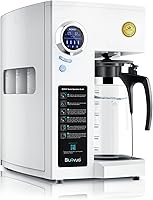
DREO has a 5 L capacity and comes with 2 autofill pitchers. Bluevua offers two choices: the original RO100ROPOT has a glass carafe and monitor, while the smaller ROPOT-Lite pairs a glass carafe with UV, remineralization and an infuser.
None of the three needs plumbing installation, but each needs power and a usable place on the counter. Consider the container you will actually pour from, how often you want to refill, and which filtration details match your water concerns.


Bluevua vs DREO countertop RO: which should you choose?
Choose DREO if you want more water ready and multiple pitchers; choose Bluevua ROPOT-Lite if a compact glass carafe and infuser fit your routine. The original Bluevua RO100ROPOT is a separate option if you prefer a glass carafe with a water-quality and filter-life monitor.
DREO’s 5 L capacity and two pitchers make it the clearest fit for a shared kitchen where more than one person serves water. The ROPOT-Lite’s 1.2 L carafe is better suited to one person or a household that is fine making smaller batches.
The original RO100ROPOT has a stated 12 L capacity, though its container arrangement is different from DREO’s two-pitcher setup. Compare how you plan to store and pour the water, not capacity in isolation.
Measure the spot where you expect to use the unit. The ROPOT-Lite measures 9.7 x 9.5 x 14.1 in, while DREO measures 15.7 x 6.7 x 13.4 in.
Allow room above and beside the system to fill it, remove its carafe or pitchers, and clean around it. For a wider view of styles and tradeoffs, see our countertop RO systems guide and plain guide to countertop water filter systems.
How do the filtration details compare?
The Bluevua ROPOT-Lite specifies a 7-stage system with UV and remineralization, while DREO describes a 7-in-1 RO system. Those descriptions help you compare features, but your choice should also account for the specific contaminants you want to address.
DREO says its system filters out 99.9% of possible contaminants, including PFOA, PFOS, chlorine and fluoride, and says SGS tested it to meet NSF/ANSI 58 standards. The ROPOT-Lite has a 5-in-1 filter, UV light and a remineralization filter, and Bluevua identifies WQA certification against NSF/ANSI/CAN 372 for lead-free content and SGS testing.
The original RO100ROPOT has 5-stage filtration and a remineralization filter. That makes it a different Bluevua choice from the Lite, even though both use glass carafes.
Before buying, find the documentation for the exact model and check whether it covers the substances you care about. Our guide to NSF 42, 53 and 58 explains what those standards address, and what a countertop RO system removes covers mineral reduction.
Does Bluevua vs DREO show which one removes more?
The available product details don't give a like-for-like contaminant comparison between these models. DREO names particular contaminants and an NSF/ANSI 58 testing claim, while Bluevua describes filtration stages, UV, remineralization and its certification and testing details.
Stage count alone is not a useful way to rank contaminant reduction. Look for model-specific evidence that names the contaminant and the method used to support the claim.
Which system fits your kitchen and serving habits?
DREO fits a routine built around several servings, while the ROPOT-Lite fits a smaller counter and a single glass carafe. The original RO100ROPOT may suit you if you want a glass carafe and monitor, with a larger stated capacity.
The ROPOT-Lite is nearly square and shorter than DREO, but it still needs space for filling and lifting the carafe. Its included fruit infuser can help if you like flavored water, and the timeline feature is intended to help track daily intake.
DREO’s two autofill pitchers give you an option for keeping more than one pitcher available. If you fill bottles for several people or dislike refilling a small carafe often, that serving format is a practical advantage.
The original RO100ROPOT also uses a borosilicate glass carafe. If glass storage is your main priority, compare it with other models in our guide to countertop RO systems with glass pitchers.
Skip the ROPOT-Lite if you expect a large reserve to be ready for a busy household and do not want to refill often. Skip DREO if its longer footprint or plastic body conflicts with your counter layout or material preference.
What setup and care should you plan for?
Set the system on a stable counter near power, then follow the model’s instructions for its first use and routine care. A countertop design avoids plumbing work, but it still needs space for water handling and cleaning.
Before setting it up, check cabinet clearance and the path for lifting the reservoir or carafe. Keep the unit accessible so you can see its controls, remove containers and clean the area around it.
For the ROPOT-Lite, plan around a 1-year filter life cycle and the twist-in replacement design. The original RO100ROPOT lists a 24-month filter life cycle, but replacement timing can differ among filters, so follow the monitor and instructions for the specific unit.
DREO includes a filter-change indicator, but no replacement interval is specified here. Use the unit’s filter alert and its care instructions rather than borrowing a schedule from either Bluevua model.
Bluevua provides a cleaning brush with the original RO100ROPOT and cleaning tools with the Lite. Clean the carafe and other removable parts as directed, and avoid assuming all components can be washed the same way.
What mistakes can make the choice less satisfying?
The most common buying mistake is choosing by stage count or ratio without checking capacity, storage and placement. A system can have appealing features and still be a poor fit for your daily routine.
- Comparing different measures as if they were identical: The stated capacities do not tell you exactly how much filtered water sits in a pitcher at every moment. Consider the included containers and the way you will use them.
- Treating stage count as a performance ranking: A 7-stage system is not automatically a better match than a 5-stage system. Check model-specific information for the contaminants you care about.
- Ignoring the refill routine: A small carafe needs more frequent attention in a busy household. Two pitchers may be more convenient when several people pour water.
- Forgetting access space: A unit that fits beneath a cabinet on paper may be awkward if you cannot lift its reservoir or remove the carafe comfortably.
- Assuming filter schedules match: The ROPOT-Lite has a stated 1-year cycle, the original RO100ROPOT lists 24 months, and DREO has an indicator without a stated interval here. Follow each model’s own instructions.
If your main concern is making RO water part of a small-home routine, our guide to countertop water filters for apartments can help you plan around limited counter space.
Which Bluevua model should you consider?
Pick the ROPOT-Lite for a smaller glass-carafe setup, and consider the original RO100ROPOT for its glass carafe and filter monitor. Their capacity figures and water-saving ratios differ, so decide which details matter most before comparing models.
The ROPOT-Lite pairs a 1.2 L carafe with UV, remineralization and an infuser. Its compact footprint works for a smaller counter and a household comfortable with refilling the carafe as needed.
The original RO100ROPOT combines 5-stage filtration, remineralization, a glass carafe and a monitor for service life and water quality. Its stated capacity is 12 L, and its pure-to-drain ratio is 2:1.
The original model may be worth comparing if you want those features together. Check the included container and the manufacturer’s instructions for the exact model before deciding whether it fits your routine.
What should you check before buying?
Measure the counter and choose the container style you will use every day. Then match the model’s capacity, monitoring features and filtration details to your household’s needs.
Use this short checklist:
- Measure counter width, depth and clearance beneath cabinets.
- Decide between one glass carafe and DREO’s two autofill pitchers.
- Think about how often you are willing to refill.
- Choose the display and monitoring features you want to see.
- Review the exact model’s information for the contaminants you want to address.
- Confirm the filter care and replacement steps for that model.
Bluevua vs DREO: which countertop RO is right for you?
Choose DREO for a larger ready supply and two pitchers; choose Bluevua ROPOT-Lite for a compact glass carafe, UV and an infuser. Consider the original Bluevua RO100ROPOT if its glass carafe and monitor suit you better.
The best Bluevua vs DREO choice comes down to how you store and serve water, how much counter space you have, and which model-specific filtration details meet your needs. Compare the exact model instructions before settling on one.
For more options, start with the best countertop RO systems.
Related guides
- Best countertop RO systems
- Best countertop RO systems with a glass pitcher
- AquaTru Classic vs Carafe
- Does a countertop RO system remove minerals?
- NSF 42 vs 53 vs 58
- AquaTru filter replacement and other RO options
Frequently asked questions
Is Bluevua or DREO better for countertop reverse osmosis?
DREO suits households that want a larger ready supply and 2 autofill pitchers. Bluevua ROPOT-Lite suits buyers who prefer a 1.2 L glass carafe and an infuser, while the original RO100ROPOT offers another glass-carafe option with a monitor.
Choose by serving style, counter space and refill habits.
Do Bluevua ROPOT-Lite and DREO need plumbing?
Neither system needs plumbing installation. Both are countertop units that need a power source.
Bluevua specifies corded electric power, and DREO includes touch control.
Set either one near a suitable outlet, with enough room to fill and remove its containers.
Which system has a larger capacity?
DREO has a 5 L capacity, compared with 1.2 L for the ROPOT-Lite. The original Bluevua RO100ROPOT lists a 12 L capacity, so compare the exact model and its container arrangement if you want a larger Bluevua option.
Does Bluevua ROPOT-Lite add minerals?
Yes. The ROPOT-Lite includes a remineralization filter as part of its 7-stage system.
The original Bluevua RO100ROPOT also includes remineralization.
The DREO details here do not specify a remineralization stage, so check its model instructions if that feature matters to you.
How do you choose between a glass carafe and autofill pitchers?
Choose either Bluevua model if a borosilicate glass carafe matters to you. Choose DREO if you prefer 2 autofill pitchers and a larger stated capacity.
Think about where you keep chilled water, how many people fill cups, and whether you want one carafe or multiple pitchers ready.