Berkey vs Brita Water Filters: Which Is Better? (November 2026)
The Big Berkey wins for most households that want long-lasting gravity filtration and larger batches, while a Brita pitcher wins for small kitchens and quick fridge-cold water. The berkey vs brita water filter choice comes down to counter space, how much water you drink and how often you want to replace a filter.
On this page (9 sections)
- Berkey vs Brita water filter: which one fits your kitchen?
- How much water do you need each day?
- Which filtration approach do you trust?
- How often will you change filters?
- Which is easier to set up and use?
- Where does each one go in the kitchen?
- Which costs less to run per gallon?
- Who should buy which?
- Verdict: which water filter is better for most homes?
The Big Berkey wins for most households that want long-lasting gravity filtration and larger batches, while a Brita pitcher wins for small kitchens and quick fridge-cold water. In this berkey vs brita water filter comparison, counter space and daily water volume matter more than either brand's reputation.
The Big Berkey holds 2.25 gallons and runs on gravity. A Brita pitcher holds 6 or 10 cups and lives in the fridge, so the two solve different problems even though both make tap water taste better.
We compared the specs of each system and the buyer patterns that fit them. This guide covers capacity, filtration, space, upkeep and cost per gallon, then names a winner for each type of household.
 Best for small kitchens and dorms
Brita Small 6-Cup Water Filter Pitcher
 Best for fridge-cold water on tap
Brita Large 10 Cup Water Filter Pitcher
Berkey vs Brita water filter: which one fits your kitchen?
The Brita pitcher wins on space and cold water, and the Big Berkey wins on batch size and filter life. Pick by where the unit will live, not by which filter sounds stronger.
A Brita pitcher sits on a fridge shelf and pours chilled water in seconds. The Big Berkey stands on the counter at 8.5 inches in diameter and 19.25 inches tall, so it needs vertical clearance and a spot away from splashes.
Neither needs electricity or plumbing. The difference is footprint and workflow: a pitcher asks you to refill small amounts often, while a gravity system asks you to wait for a larger batch to drip through.
What each system includes
The Brita Small 6-Cup comes with one Standard filter and a SmartLight indicator. The Brita Large 10-Cup also ships with one filter and adds a locking flip lid.
The Big Berkey includes two authentic Black Berkey elements, a priming button, blocking plugs, washers and assembly instructions. The upper chamber nests inside the lower one when you take it apart for storage.
Where each one fits
The 6-cup Brita measures 9.1 x 4.6 x 9.7 inches and fits most mini-fridges and fridge doors. The 10-cup model measures 10.7 x 5.4 x 10.1 inches and sits on standard refrigerator shelves.
The Big Berkey is a countertop unit for homes, apartments, offices and RVs. It doesn't fit in a fridge, so plan a permanent spot near a tap for refilling.
How much water do you need each day?
A Brita pitcher suits one or two people who drink a few glasses a day, while the Big Berkey suits households of 1 to 4 people who want several gallons on hand. Match capacity to your busiest day, not your average one.
The Big Berkey's 2.25-gallon lower chamber gives you a large reserve for cooking, coffee, tea and filling reusable bottles. A 10-cup Brita fills about three 24-ounce bottles per reservoir, which is enough for a small family's lunch and dinner.
The 6-cup Brita is the tightest of the group. It's ideal for a dorm room or a single person, but a family will refill it several times a day.
When a pitcher is the right size
Choose a Brita pitcher if you mainly want cold drinking water and don't mind topping it up. The 10-cup model hits a sweet spot for couples and small families.
The 6-cup model wins when fridge space is tight. Its small footprint and easy-fill lid make it a natural fit for a mini-fridge.
When gravity capacity pays off
Choose the Big Berkey if you want to fill a large batch once and draw from it through the day. Its 2.25 gallons cover drinking, cooking and a few water bottles without constant refills.
The Purewell 3-Stage also holds 2.25 gallons. Its 0.01μm hollow fiber membrane is finer than the 0.2μm pore size common in other gravity filters, and it flows at about 4 gallons per hour.
Which filtration approach do you trust?
Both brands filter water, but they target different things and certify different claims. Brita's pitchers carry WQA NSF/ANSI certification for chlorine taste and odor, copper, mercury and cadmium.
Berkey says its Black Berkey elements reduce a broad range of contaminants found in treated water. The elements use a proprietary media blend, so you're relying on Berkey's own testing claims rather than a single NSF standard.
The Purewell system splits the difference with NSF/ANSI 42 and 372 certification and a multi-stage design. Its carbon block handles chlorine and organic matter, the silver ion membrane adds protection and the hollow fiber membrane intercepts fine particles.
What Brita is certified to reduce
Both Brita pitchers reduce chlorine taste and odor, copper, mercury and cadmium. The 10-cup model also lists zinc.
That covers the most common tap-water complaints: a chlorine smell, metallic taste and the metals that can leach from older pipes. Brita's certification is specific and easy to verify.
What the gravity systems target
The Big Berkey is built for broad contaminant reduction, and Berkey says the elements are backed by third-party lab testing. The Purewell adds rust, sediment and organic matter to its reduction list.
Neither gravity system lowers TDS, and Purewell says so directly. If you're shopping for a low-TDS number, a distiller or reverse osmosis system is the better tool.
Our comparison of the Berkey water filter vs reverse osmosis covers that trade-off in detail.
How often will you change filters?
The Brita needs a new Standard filter every 40 gallons, while the Big Berkey's elements last up to 6,000 gallons. Fewer changes make the gravity system easier to live with over years.
Brita's SmartLight indicator on the 6-cup model tracks filter life precisely. The 10-cup model uses a sticker indicator that you check at a glance.
Either way, expect a swap about every 2 months.
A pair of Black Berkey elements covers up to 6,000 gallons before replacement is recommended. Actual life varies with water quality and use.
That's years of filtration for a typical household.
The Purewell's two carbon filters are rated at 3,000 gallons each, for 6,000 gallons combined. Purewell still suggests changing elements every 6 months for best performance.
Filter changes and plastic waste
One Brita Standard filter replaces up to 300 single-use 16.9 oz plastic bottles. Brita says switching its pitchers can replace up to 1,800 bottles a year for a family.
The gravity systems push that further. With up to 6,000 gallons per Berkey element pair, the bottle savings add up quickly, though you'll still need to wash and carry reusable bottles.
What filter swaps cost in effort
A Brita filter swap takes a minute: pull the old filter, rinse the new one and click it in. You don't need to prime or dry anything.
Berkey elements need priming before first use, and the system needs occasional cleaning of the stainless chambers. The effort is front-loaded and then light.
Which is easier to set up and use?
The Brita pitcher wins on day-one simplicity, and the Big Berkey wins on hands-off daily use. Both are manual, but they ask different things of you.
The Brita needs a rinse of the pitcher and filter, then a few fill cycles. After that, you fill it from the tap and pour.
The SmartLight or sticker tells you when the filter is done.
The Big Berkey needs priming of both elements, assembly of the chambers and a first batch to flush. After that, you fill the top chamber and let gravity do the work.
Berkey says no tools are needed.
Setup for a pitcher
The 6-cup Brita's easy-fill lid lets you refill without removing the lid. That matters in a mini-fridge where you don't want to pull the whole pitcher out.
The 10-cup model's locking lid keeps water from sloshing when you pour. It's a small feature that makes a difference for kids and busy mornings.
Setup for a gravity system
Priming the Black Berkey elements is the main task. Berkey includes a priming button to help push water through the media before you install them.
The Purewell arrives with the upper and lower chambers, a spigot, two filters and a non-slip stand. Purewell warns not to add tap water to the top chamber once the bottom is full, or it will leak out.
Where does each one go in the kitchen?
A Brita pitcher goes in the fridge, and a gravity system goes on the counter. That single difference decides the choice for many small kitchens.
Fridge space is precious. The 6-cup Brita fits fridge doors and mini-fridges, while the 10-cup model takes a standard shelf.
If your fridge is already packed, a pitcher adds pressure.
A gravity system needs counter depth and vertical clearance. The Big Berkey's 19.25-inch height and 8.5-inch diameter need a dedicated spot.
The Purewell stands 20 inches tall with an 8.9-inch footprint.
Counter space math
Measure your counter before you buy a gravity system. Leave room to lift the top chamber for refills and to reach the spigot without knocking nearby appliances.
The Big Berkey's chambers nest for storage, but that only helps when you pack it away. In daily use, it occupies its full height.
Fridge space math
Check your shelf height and door bins for a pitcher. The 6-cup model is the safer bet for a mini-fridge or a crowded door.
The 10-cup model needs a clear shelf. Measure the space before ordering, and leave a little room to tilt the pitcher for pouring.
Which costs less to run per gallon?
The Big Berkey wins on cost per gallon over its long filter life, while Brita wins on the lowest upfront spend. Neither uses electricity, so filters are the main running cost.
Berkey says its elements deliver filtration for pennies per gallon across up to 6,000 gallons. The upfront cost is higher, but the per-gallon figure drops as the element pair keeps working.
Brita's Standard filters are inexpensive and easy to find, but you'll replace them every 40 gallons. For a household that drinks a lot of water, those swaps add up faster.
When the Berkey pays off
The Berkey math works best for households of 2 to 4 people who drink several gallons a week. The long element life spreads the upfront cost over years.
It also wins for off-grid use. Because it needs no electricity or plumbing, it works in an RV, cabin or during a water advisory.
When the Brita pays off
The Brita pitcher wins for renters, students and anyone who wants filtered water without a permanent counter commitment. The entry cost is low and the pitcher moves with you.
It also wins when fridge-cold water is the main goal. Chilled water from a pitcher is hard to beat on a hot day, and the pitcher is already in the fridge.
Who should buy which?
Buy the Big Berkey if you want large batches, long filter life and a permanent counter spot. It's the better fit for families of 1 to 4 people and for RVs and off-grid setups.
Buy a Brita pitcher if you want cold water from the fridge with minimal setup and a low upfront cost. The 10-cup model suits small families, and the 6-cup model suits dorms and solo drinkers.
The Purewell 3-Stage is the pick if you want stainless gravity filtration with a finer membrane and a lower entry point than the Berkey. It carries NSF/ANSI 42 and 372 certification and includes two filters.
Pick the Big Berkey if...
You drink several gallons a week and want to fill once. You have counter room for a 19.25-inch unit.
You like the idea of years between filter changes and don't mind priming elements at setup.
Pick a Brita pitcher if...
You want water cold and close at hand. Your kitchen is short on counter space.
You'd rather spend less upfront and swap a small filter every couple of months.
Pick the Purewell if...
You want the gravity format without the Berkey price tier. Its 0.01μm membrane and included stand make it a strong alternative, though it scores lower here for capacity-to-footprint and filter-change frequency.
If you're weighing other gravity options, our roundup of the best ceramic gravity water filters covers units with ceramic elements. For bigger households, the best large capacity gravity water filters lists systems that hold more than these two.
Verdict: which water filter is better for most homes?
For most households, the Big Berkey is the better long-term buy, and a Brita pitcher is the better small-kitchen pick. The berkey vs brita water filter decision comes down to whether you value batch capacity and filter life or fridge-cold convenience and a low entry cost.
Pick the Big Berkey if you have the counter space and want to stop thinking about filters for years. Pick the 10-cup Brita if your fridge is the main water source and you want chilled water without a counter commitment.
The 6-cup Brita is the right call for dorms and mini-fridges.
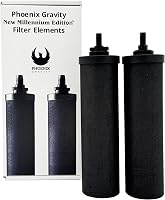
If you're still comparing gravity systems, read our breakdown of the Phoenix gravity water filter and what changed from the Black Berkey elements. That guide helps you decide whether the newer element design is worth waiting for.
Frequently asked questions
Does a Berkey filter remove more than a Brita pitcher?
Berkey says its Black Berkey elements reduce over 200 typical contaminants, while Brita's certified pitchers target chlorine taste and odor, copper, mercury and cadmium. The bigger difference for most homes is capacity and filter life, not the length of either contaminant list.
Can I put Berkey-filtered water in the fridge?
Yes. Fill the lower chamber, then pour into a glass bottle or pitcher and chill it.
The Big Berkey itself is a countertop unit and isn't designed to store in a fridge, while a Brita pitcher is built to sit on a fridge shelf.
How long does each filter last?
A Brita Standard filter lasts 40 gallons, or about 2 months. A pair of Black Berkey elements lasts up to 6,000 gallons, and each Purewell carbon element is rated for 3,000 gallons with swaps every 6 months for best performance.
Is a gravity filter worth it over a pitcher?
It is if your household drinks several gallons a week and you want fewer filter changes. A pitcher is the better buy for one or two people, a dorm room or anyone who mainly wants cold water from the fridge.
Do either of these need electricity?
No. The Big Berkey and the Purewell run on gravity alone, and the Brita pitchers are manual too.
None of them needs plumbing, a power outlet or installation.