Does a Water Distiller Remove Arsenic?
Yes, a water distiller removes arsenic from tap water. Boiling water into steam leaves arsenic behind in the boil chamber, so the collected water is arsenic-free. You still need to clean the chamber regularly so the leftover arsenic doesn't build up.
On this page (9 sections)
- How does distillation remove arsenic from water?
- Does distillation remove all types of arsenic?
- Why does distillation beat a standard carbon filter for arsenic?
- What does the arsenic left behind do to the distiller?
- How often should you clean a distiller that handles arsenic?
- Does a distiller's charcoal filter remove arsenic?
- How do you know the distilled water is actually arsenic-free?
- Which distiller setup makes sense if arsenic is your concern?
- The bottom line on arsenic and water distillers
Yes, a water distiller removes arsenic from tap water. Boiling the water into steam leaves the arsenic behind in the boil chamber, so the water you collect is free of it.
This is one reason distillation handles arsenic better than a basic carbon pitcher filter.
The catch is maintenance. The arsenic doesn't disappear; it collects in the chamber and the leftover water.
Clean the distiller on a schedule and the process keeps working. Skip cleaning and residue builds up.
How does distillation remove arsenic from water?
Distillation removes arsenic because arsenic does not turn into vapor at water's boiling point. The distiller heats water to 212°F, the water becomes steam, and the arsenic stays in the liquid that remains in the boil chamber.
The steam rises into cooling coils, condenses back into water, and drips into a separate collection bottle. The arsenic never makes that trip.
It stays in the chamber with the other dissolved solids. This is the same reason distillation removes lead, fluoride, sodium and most heavy metals.
Anything that boils at a much higher temperature than water gets left behind. Arsenic falls into that group, so the collected water comes out clean.
The key is that the steam and the raw water never mix again after the boil. A distiller with a glass collection bottle and stainless steel interior keeps that separation clean from start to finish.
Our guide to the best countertop water distillers covers models built this way.
Does distillation remove all types of arsenic?
Distillation removes both common forms of arsenic in water: inorganic arsenic and organic arsenic. Inorganic arsenic is the kind that comes from rock, soil and industrial runoff, and it's the form regulators worry about most in drinking water.
Organic arsenic is less common in tap water. Neither form vaporizes at 212°F, so both stay in the boil chamber.
That means a distiller doesn't need a special arsenic filter to handle the metal. The steam is the filter.
The one thing distillation doesn't catch is anything light enough to turn into vapor along with the water. Volatile organic compounds like chlorine can rise with the steam and land in the collection bottle.
Arsenic isn't one of them. If your water has both arsenic and chlorine, a carbon filter after distillation covers the chlorine while distillation handles the arsenic.
The Green Piece® Water Distiller Filters review explains how post-distillation carbon works.
Why does distillation beat a standard carbon filter for arsenic?
A standard carbon pitcher filter is not built for arsenic, while distillation removes it as part of the boiling process. Most basic carbon filters are designed for chlorine, taste and odor.
Arsenic needs a specialized filter media, and only some filters carry that certification. Distillation sidesteps the question because it doesn't rely on the filter medium at all.
The metal simply can't travel with the steam. That makes distillation a straightforward choice if arsenic is your main concern.
You still want to know what's in your water first. A lab test tells you the arsenic level and whether other contaminants are present.
That result helps you decide if distillation alone is enough or if you want a carbon stage for taste and volatile compounds. The VEVOR 1.1 Gallon Water Distiller uses a 304 stainless steel body and a BPA-free container, so the water path stays clean from boil to bottle.
What does the arsenic left behind do to the distiller?
The arsenic stays in the leftover water and residue, so the boil chamber slowly collects the minerals and metal you removed. Over time that residue hardens into scale and film on the chamber walls and heating plate.
The distiller keeps working, but scale makes it work harder and can shorten its life. Empty the leftover water after each cycle and wipe the chamber.
Every few weeks, run a deeper clean with a descaling solution or citric acid to dissolve the buildup. A distiller with a stainless steel interior resists staining better than one with plastic parts.
The Megahome Countertop Water Distiller uses 304 stainless steel for the boil chamber, steam dome and condensing coils, so the water never touches plastic. That makes cleaning easier and keeps the arsenic residue contained to surfaces you can reach.
Our guide on how to clean a water distiller walks through the full routine step by step.
How often should you clean a distiller that handles arsenic?
Clean the chamber after every cycle and descale it at least once a month, or sooner if your water is hard. Arsenic residue is only one part of the buildup.
Calcium and magnesium leave scale too, and scale is the bigger threat to the heating element. A quick rinse after each batch takes a minute.
A full descale takes longer but keeps the distiller running at full speed. Citric acid or a vinegar-and-water soak loosens most film.
Rinse well afterward so no cleaning residue ends up in your next batch. If you distill daily, a monthly deep clean is a good baseline.
Watch for white crust on the heating plate or a slower boil; both mean it's time to descale. Keep a spare carbon filter on hand too, since most distillers use one to catch volatile compounds.
Does a distiller's charcoal filter remove arsenic?
The charcoal filter does not remove arsenic, and it isn't meant to. Distillation already handled the arsenic before the water reached the filter.
The carbon stage catches what distillation misses: chlorine, volatile organic compounds and lingering taste and smell. Those compounds can turn into vapor and carry over with the steam, which is why many distillers include an optional carbon filter.
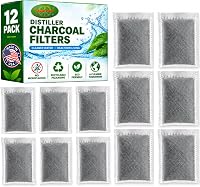
The Green Piece® filters are made from GMO-free corn cellulose with coconut shell activated carbon, and they fit Megahome and most 1-gallon countertop distillers. Replace the sachet about once a month.
If you skip the carbon filter, distillation still removes the arsenic. You'd just notice more chlorine taste in the finished water.
For setup steps on fitting the filter and running a cycle, see our guide on how to use a water distiller.
How do you know the distilled water is actually arsenic-free?
Test your tap water first, then test the distilled water once to confirm the process is working. A lab test is the only way to know the actual arsenic level in either sample.
Home test strips can give you a rough reading, but they're not precise enough for a health decision.
If your tap water tests high for arsenic, check with your local water utility or a certified lab for guidance. A distiller should bring the arsenic down to a level that meets drinking water standards, but the only proof is a test.
After the first test, you can rely on routine cleaning and the distiller's design. If the reading still shows arsenic, check for cross-contamination: a dirty collection bottle or a chamber that wasn't emptied between cycles.
A glass bottle and a stainless chamber are easier to keep clean than plastic parts. Clean both before the test batch so the sample reflects the distillation, not the equipment.
Which distiller setup makes sense if arsenic is your concern?
A distiller with a stainless steel water path and a glass collection bottle is the safest setup for arsenic removal. Stainless resists residue and is easy to scrub, and glass won't hold onto contaminants.
The Megahome Countertop Water Distiller meets both points: full 304 stainless steel interior and exterior, a porcelain-lined nozzle and a glass collection bottle. It distills 1 gallon every 5.5 hours and shuts off on its own when the cycle finishes.
Megahome backs it with a 1 year warranty. The VEVOR 1.1 Gallon Water Distiller is the faster option at 750W, with a 4-liter tank and a 304 stainless steel body.
It also has an auto-shutoff that kicks in above 239°F. Either one removes arsenic; pick the Megahome for the glass bottle and the VEVOR for speed and capacity.
Add a carbon filter if chlorine taste bothers you.
The bottom line on arsenic and water distillers
Does a water distiller remove arsenic? Yes, and it does it reliably as long as you keep the machine clean.
The boiling process separates the metal from the steam, so the water you collect is arsenic-free.
Empty the chamber after each cycle, descale monthly and add a carbon filter for taste. Pick the Megahome if you want a glass bottle and a stainless build; pick the VEVOR if speed and tank size matter more.
Either way, test your water first so you know what you're starting with, then let the distiller do the rest.
Frequently asked questions
Does distilled water contain any arsenic at all?
Distilled water should be free of arsenic because the metal does not vaporize at the distiller's boiling point. Any trace that shows up usually comes from the collection bottle or the chamber, so rinse both and keep them clean.
Does boiling water remove arsenic?
No. Boiling alone does not remove arsenic; it only concentrates it as water turns to steam.
Distillation works because the steam is collected separately from the water that stays behind, so the arsenic stays in the chamber.
Can I drink distilled water every day?
Distilled water is safe to drink, but it contains no minerals. Many people drink it regularly and get minerals from food; if you rely on water for minerals, talk to your doctor about whether distilled water fits your diet.
Do I need a carbon filter if I distill my water?
A carbon filter is optional for arsenic, which distillation already removes. It helps with chlorine and other volatile compounds that can turn into vapor and carry over into the distilled water, so many people add one for taste.