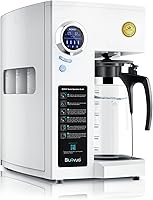
Are Countertop Water Filters Worth It?
Yes, for most renters and small households a countertop water filter is worth it. It filters your tap water without plumbing work or a permanent install, and a reverse osmosis unit removes far more than a basic pitcher.
On this page (9 sections)
- What does a countertop water filter actually do?
- How is a countertop filter different from a pitcher or an under-sink system?
- When are countertop water filters worth it?
- Which type of countertop filter fits your kitchen?
- Which countertop water filters are worth buying?
- How much does countertop filtration really cost?
- What maintenance does a countertop filter need?
- When are countertop water filters not worth it?
- How do you decide if a countertop filter is worth it for you?
Yes, for most renters and small households a countertop water filter is worth it. It filters your tap water without plumbing work or a permanent install, and a reverse osmosis unit removes far more than a basic pitcher.
The value comes down to three things: how much you spend on bottled water now, how much counter space you can give up, and how far you want filtration to go. Answer those and the decision is usually clear.
What does a countertop water filter actually do?
It filters water at the point of use, on your counter, with no plumber needed. You fill a tank or connect a diverter to your faucet, and the unit pushes water through carbon, a membrane or both before it reaches a pitcher or dispenser.
Reverse osmosis models send water through a semipermeable membrane that rejects dissolved solids, then polish it with carbon. Gravity models rely on carbon block, hollow fiber and silver ion layers and let gravity pull the water down through them.
Both types remove the chlorine taste and smell that make tap water hard to drink.
The difference is depth. An RO system targets contaminants in the water itself, while a gravity filter mainly improves taste and traps sediment and some heavy metals.
Knowing which one you need is the first step toward deciding whether countertop water filters are worth it for your home.
How is a countertop filter different from a pitcher or an under-sink system?
A countertop unit sits between the two. It filters more thoroughly than a pitcher and needs no cabinet space or plumbing like an under-sink system.
A pitcher is cheap and simple but holds a small volume and uses a basic carbon cartridge. An under-sink RO system filters deeply but needs a dedicated faucet, a drain connection and room under the cabinet.
A countertop RO gives you the membrane filtration without touching your plumbing.
For renters, that middle ground matters. You can move the unit to a new apartment and take it with you, and you never drill a hole in a landlord's countertop.
That flexibility is a big part of why countertop water filters are worth it for people who don't own their home.
When are countertop water filters worth it?
They're worth it when you rent, have a small kitchen or want better water without a permanent install. The unit earns its place if you already buy bottled water or dislike the taste of your tap supply.
Renters get the clearest win. A countertop RO filters deeply and moves with you when your lease ends.
If you're outfitting a small rental, our guide to the best countertop water filters for apartments covers the compact options that fit tight counters.
Homes on private wells also benefit. Well water often carries sediment, iron and hardness that a basic pitcher can't handle, and an RO unit targets dissolved contaminants.
Our roundup of the best countertop water filters for well water helps you match a unit to your test results.
If your main complaint is taste and you want the simplest possible setup, even a faucet-mounted carbon filter may do. A full RO unit makes more sense when you want to cut dissolved solids and bottled water spending at the same time.
Which type of countertop filter fits your kitchen?
Pick reverse osmosis for the deepest filtration and gravity for the simplest, power-free setup. Each type has a clear best use, and the choice usually settles the worth-it question for you.
RO units need an outlet and produce some wastewater, but they remove the widest range of contaminants. Gravity filters need no electricity and run quietly, though they work slowly and don't reduce total dissolved solids.
Carbon-only models sit in between on cost and performance.
Counter space matters too. An RO system with two pitchers takes more room than a single stacked gravity unit.
Measure your counter and your tallest cabinet clearance before you commit, because a unit that doesn't fit won't get used.
Which countertop water filters are worth buying?
The best pick for most people is the DREO 3:1 Countertop RO, because it filters deeply, fills its pitchers automatically and needs no installation. It's the highest-scoring unit here and the one we'd choose for a typical rental kitchen.
DREO says its 7-in-1 RO system filters out 99.9% of possible contaminants, including PFOA, PFOS, chlorine and fluoride. It holds 5 liters and includes two autofill pitchers, a built-in TDS meter, a change filter indicator and touch controls.
The 3:1 pure-to-drain ratio means it sends less water down the drain than older RO units.
Is the AquaTru Classic worth the counter space?
Yes, if certified contaminant removal matters most to you and you can spare 14 inches of counter depth. AquaTru's system is tested and certified by IAPMO to meet NSF/ANSI standards 41, 53, 58, 401 and P473 for 84 contaminants, including microplastics and forever chemicals.
It needs no plumbing, holds 2.7 liters and takes standard quick-twist filters. AquaTru says one filter set replaces 4,500 plastic bottles.
It's heavier and bulkier than the DREO, so check your counter before ordering.
When is a gravity filter the smarter buy?
Pick a gravity filter when you have no outlet to spare or want the simplest upkeep. The Purewell 3-Stage runs on gravity alone, so it works in a cabin, an RV or a kitchen where plugs are already crowded.
It holds 2.25 gallons, uses a 0.01-micron hollow fiber membrane plus carbon and silver ion layers, and ships with two filters and a stand. The 304 stainless steel housing is sturdier than plastic.
It doesn't lower TDS, so it's a taste and sediment fix rather than a full RO replacement.
How much does countertop filtration really cost?
The upfront unit is the big expense, and replacement filters set the ongoing cost. Compare that yearly total with what you spend on bottled water to see if a countertop filter pays off for you.
RO systems cost more to buy than gravity or carbon units because of the pump and membrane. Their filters also need changing on a schedule, though the intervals stretch from 6 months to 2 years depending on the model and your water.
A gravity unit has cheaper cartridges but works more slowly.
Add up a year of bottled water for your household. For many families, that total clears the cost of an RO unit and its first year of filters.
If you drink mostly tap water already and only want better taste, a lower-cost carbon or gravity unit gets you there without the bigger spend.
What maintenance does a countertop filter need?
Plan on cartridge changes and periodic cleaning, and not much else. RO units also need a self-clean cycle run and the drain line kept clear.
Change filters when the indicator says so or on the maker's schedule. The DREO has a filter life indicator and touch controls to track this.
AquaTru's filters last 600 to 1,200 gallons, roughly 6 months to 2 years. The Purewell's two carbon filters are rated for 3,000 gallons each but the brand recommends replacing them every 6 months for best performance.
Clean the tanks and pitchers regularly with mild soap and water. Run the self-clean cycle on RO models that offer one.
If the unit sits unused for weeks, follow the maker's storage steps before drinking from it again. Our Aquasana countertop water filter review shows how a carbon-style unit compares on upkeep.
When are countertop water filters not worth it?
Skip one if you already have a good under-sink system, drink very little tap water or can't give up the counter space. In those cases the unit adds cost and clutter without solving a real problem.
A whole-house or under-sink filter already treats your water at the source, so a countertop unit would repeat the job. If you rarely drink water at home, the filters may expire before you use them.
And in a kitchen with almost no free counter, a bulky RO unit becomes an obstacle rather than a convenience.
If your water tests clean and tastes fine, you don't need one either. The honest answer to are countertop water filters worth it depends on your water and your habits, not on the category as a whole.
How do you decide if a countertop filter is worth it for you?
Run the math and check your water first, then pick the type that fits your space. If you rent, buy bottled water or dislike your tap taste, a countertop filter usually earns its place.
Start with a water test or your utility's report to see what's actually in your supply. If dissolved solids and contaminants are the issue, choose RO.
If taste and sediment are the main complaint and you want no power draw, a gravity filter does the job. For a glass pitcher setup, our roundup of the best countertop RO systems with a glass pitcher covers that style.
Pick the DREO 3:1 Countertop RO for the deepest filtration with the least fuss. Choose the AquaTru Classic if certified contaminant removal is your priority.
Go with the Purewell gravity filter if you have no outlet to spare. Any of the three answers are countertop water filters worth it with a clear yes for the right household.
Frequently asked questions
Do countertop water filters remove fluoride?
Reverse osmosis models do, since RO membranes reject fluoride along with most dissolved solids. Gravity and basic carbon filters usually leave fluoride in the water, so check the purification method before you buy if fluoride removal matters to you.
How often do countertop filter cartridges need changing?
It depends on the type. Gravity filters are commonly replaced every 6 months, while RO systems vary by maker and use.
The DREO has a filter life indicator and touch control so you can track when a change is due without guessing.
Can a countertop water filter make you sick if you don't maintain it?
A neglected filter can harbor bacteria and stop removing contaminants well. Change cartridges on schedule, run the self-clean cycle on models that have one, and follow the maker's storage instructions if the unit sits unused for long periods.
Do countertop water filters need electricity?
RO units do, because a pump pushes water through the membrane. Gravity filters like the Purewell need no power at all, which makes them a better fit for off-grid cabins, RVs or kitchens with limited outlets.
Is a countertop filter cheaper than bottled water?
Over a year, most countertop filters cost less than buying cases of bottled water for a family. The upfront unit costs more than a pitcher, but replacement cartridges spread the cost and cut plastic waste at the same time.