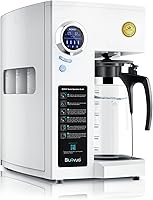
AquaTru Classic vs AquaTru Glass Carafe: Which Is Better? (November 2026)
AquaTru Classic wins overall for most countertop RO shoppers, while the Glass Carafe is the better choice for glass storage and alkaline mineral boost. Compare capacity, filter schedules and counter space before choosing.
On this page (12 sections)
- AquaTru Classic vs AquaTru Glass Carafe: quick verdict
- How do the AquaTru systems compare side by side?
- Which system gives you the better filtration setup?
- Does the alkaline mineral boost make the Glass Carafe better?
- Which AquaTru fits a small counter better?
- Which product is better for daily water storage?
- Is borosilicate glass worth choosing over BPA-free plastic?
- Which filter schedule is easier to manage?
- How should you set up and care for either system?
- Who should buy the AquaTru Classic?
- Who should buy the AquaTru Glass Carafe?
- Which AquaTru should you choose?
AquaTru Classic wins overall for most countertop RO shoppers, while the Glass Carafe is better for glass storage and an alkaline mineral boost. In the aquatru classic vs aquatru glass carafe comparison, the Classic offers the broader everyday fit, while the Glass Carafe focuses on a narrower body, a glass serving vessel and 4-stage filtration.
Both systems use corded electricity and countertop reverse osmosis. Neither requires plumbing or drilling, so your decision comes down to storage, counter width and whether the alkaline stage matters.
The Classic has a 2.7-liter capacity and a BPA-free plastic body. The Glass Carafe uses a 0.66-gallon tap-water tank, a 0.5-gallon clean-water tank and a borosilicate glass carafe with lid.


AquaTru Classic vs AquaTru Glass Carafe: quick verdict
Choose the AquaTru Classic for the best overall balance of capacity, certified filtration and simple countertop use. Its 2.7-liter capacity and no-plumbing design make it the easier general recommendation for a household that wants a countertop RO dispenser.
Pick the Glass Carafe when the serving vessel is central to the decision. Its purified water dispenses into a 64-ounce borosilicate glass carafe with lid, and its alkaline mineral boost sets it apart from the Classic.
The Glass Carafe measures 14 inches long, 7.5 inches wide and 13 inches high. The Classic measures 14 inches long, 12 inches wide and 14 inches high, so the Glass Carafe saves width rather than depth.
The Classic scores 8.6, compared with 8.4 for the Glass Carafe. Our score weighs specs, features and buyer feedback against the needs behind this search.
How do the AquaTru systems compare side by side?
The Classic is wider and heavier, while the Glass Carafe is narrower and built around a glass pitcher. Both use reverse osmosis and corded electricity, but their storage and materials create different routines.
| Feature | AquaTru Classic Countertop RO | AquaTru Glass Carafe |
|---|---|---|
| Purification method | Reverse osmosis | Reverse osmosis |
| Capacity | 2.7 liters | 0.66-gallon tap tank and 0.5-gallon clean tank |
| Serving container | Dispenser | 64-ounce borosilicate glass carafe with lid |
| Dimensions | 14 x 12 x 14 in | 14 x 7.5 x 13 in |
| Material | BPA-free Plastic | Borosilicate Glass carafe |
| Contaminant claim | Certified to remove 84 contaminants | Reduces 84 contaminants |
| Filter design | Quick twist and change filters | 4-stage filtration with alkaline filter |
| Power | Corded Electric | Corded Electric |
| Maximum supported TDS | 500 ppm | 600 ppm |
| Score | 8.6 | 8.4 |
The Classic weighs 22.8 pounds, so it is a substantial countertop appliance. The Glass Carafe is described with an approximate unit weight of 9 pounds, making it easier to reposition.
The Classic's 12-inch width needs more side-to-side room. The Glass Carafe gives up some clean-water tank size for a body that is 4.5 inches narrower.
Which system gives you the better filtration setup?
The Classic is the stronger choice for shoppers who want a certified reverse osmosis system with a clear 84-contaminant claim. The Glass Carafe is the better fit when that filtration approach plus an alkaline stage matches your preference.
The Classic is certified by IAPMO to meet NSF/ANSI standards 41, 53, 58, 401 and P473 for water filters. Its product information connects those standards with removal of 84 contaminants, including microplastics and PFOA and PFOS.
The Glass Carafe uses a 4-stage reverse osmosis system. Its product information also describes reduction of 84 harmful contaminants, including microplastics, arsenic and PFOA and PFOS, with testing and certification to NSF standards by IAPMO.
Both are countertop RO options. The distinction is the Glass Carafe's extra alkaline stage, not a different basic purification method.
For general filtration, choose the Classic. For reverse osmosis plus alkaline mineral boost, choose the Glass Carafe.
Does the alkaline mineral boost make the Glass Carafe better?
The Glass Carafe wins if you specifically want alkaline mineral boost after reverse osmosis. It includes a filter that adds minerals such as calcium, magnesium, potassium and sodium to the purified water.
That feature gives the Glass Carafe a defined reason to choose it beyond the glass container. Its 4-stage system includes a pre/carbon filter, a reverse osmosis filter and a VOC carbon filter with pH and mineral boost.
The Classic is described as a reverse osmosis water purifier with TDS reduction. Its product data does not include an alkaline mineral boost, so it is the better pick for straightforward RO.
If you want the system to add alkaline minerals, select the Glass Carafe. If not, the Classic keeps the decision focused on capacity, footprint and filter care.
Which AquaTru fits a small counter better?
The Glass Carafe fits a narrow counter better because it is only 7.5 inches wide. The Classic needs 12 inches of width, although both systems extend 14 inches in their longest dimension.
Counter depth can change the answer. The Glass Carafe is 14 inches deep, while the Classic is 12 inches deep, so a shallow counter may favor the Classic despite its greater width.
Height is close between the systems. The Classic stands 14 inches high, and the Glass Carafe stands 13 inches high.
Use the dimensions as a rectangle on your counter, then consider where you will pour tap water and remove the clean-water container. A unit can fit physically and still be awkward if nearby cabinets block access.
Choose by the direction your counter lacks. Narrow side-to-side space points to the Glass Carafe, while shallow front-to-back space points to the Classic.
Which product is better for daily water storage?
The AquaTru Classic offers the simpler capacity choice with its 2.7-liter dispenser. The Glass Carafe divides storage between a 0.66-gallon tap-water tank, a 0.5-gallon clean-water tank and a 64-ounce carafe.
The Classic suits someone who wants a countertop dispenser with one clear capacity figure. The Glass Carafe suits someone who wants purified water collected in a separate serving vessel with a lid.
The tank arrangement creates a different rhythm. You fill the tap-water tank, let the system process water and use the clean water from the carafe.
The Classic centers the routine on its dispenser.
Drinking, cooking, coffee, tea, ice cubes, baby formula and pet bowls all affect how often you refill.
Choose the Classic for the more direct capacity comparison. Choose the Glass Carafe when storing and serving water in glass matters more than having the larger stated system capacity.
Is borosilicate glass worth choosing over BPA-free plastic?
Choose the Glass Carafe for a borosilicate glass serving vessel, and choose the Classic for a BPA-free plastic body centered on dispensing. The material difference is one of the clearest reasons to pick between them.
The Glass Carafe's carafe is made from borosilicate glass and includes a lid. That makes it a natural fit for serving purified water or keeping a prepared quantity together.
Glass calls for more care during handling. Move the carafe deliberately and keep it on a stable surface.
The Classic uses BPA-free plastic. Its product data identifies the material for the unit, and the system is designed as a countertop dispenser rather than a separate glass pitcher.
If you prefer glass for serving, the Glass Carafe is the clear winner. Our guide to the best countertop RO systems with a glass pitcher covers the wider glass-pitcher category.
If your priority is a countertop purifier with a dispenser format, the Classic is easier to match to that routine.
Which filter schedule is easier to manage?
The Classic has the simpler headline schedule, while the Glass Carafe has more filter stages to track. The Classic's listed filter life cycle is 6 months, with product information describing filters lasting from 6 months to 2 years.
The Glass Carafe uses separate intervals. Its pre/carbon filter lasts up to 6 months or 300 gallons, its reverse osmosis filter up to 2 years or 600 gallons, and its alkaline mineral boost VOC filter 1 year or 300 gallons.
That schedule gives the Glass Carafe different replacement dates for different stages. The benefit is a defined 4-stage design, but the routine requires attention to which filter has reached its limit.
The Classic has quick twist and change filters included with the first purifier. Its product information describes a filter set lasting from 6 months to 2 years, depending on the filter.
For a deeper look at replacement planning, read AquaTru filter replacement and other RO options. Choose the Classic for fewer filter-stage decisions, or choose the Glass Carafe when its 4-stage alkaline setup is worth managing.
How should you set up and care for either system?
Set either purifier on a stable countertop near its power connection, then use the water tanks and filters according to the system's instructions. Both are corded-electric countertop systems, so setup does not involve plumbing or drilling.
The Classic takes minutes to set up and uses a dispenser format. Position the purifier, connect power, fill the water supply and collect purified water.
The Glass Carafe also needs no plumbing, drilling or installation. It plugs into a standard outlet, uses a tap-water tank and dispenses purified water into the glass carafe with lid.
Keep the carafe on a stable surface when full. Filter care is central for both systems, so replace filters according to the applicable schedule.
For another gravity-oriented comparison, see Berkey Phoenix vs Black Elements, especially if you're also considering a phoenix gravity water filter. That comparison is a different system category, so keep the no-plumbing convenience separate from the filtration method.
Who should buy the AquaTru Classic?
Buy the AquaTru Classic if you want the best overall countertop RO choice, a 2.7-liter dispenser and certified standards across several NSF/ANSI categories. It suits shoppers who want countertop reverse osmosis without making a glass carafe or alkaline minerals the priority.
The Classic is also the better match for a counter with limited front-to-back depth. Its 12-inch depth is 2 inches less than the Glass Carafe's 14-inch depth.
Choose it when BPA-free plastic works for your household and a dispenser format is more useful than a separate serving pitcher. Its 22.8-pound weight means you should choose the counter location carefully.
The Classic supports water with a maximum TDS level of 500 ppm. It is a corded-electric unit with reverse osmosis purification and a stated 2.7-liter capacity.
Its trade-offs are that it is wider, heavier and plastic, while filter information spans different life periods. Those points do not outweigh its overall balance for most buyers.
Who should buy the AquaTru Glass Carafe?
Buy the AquaTru Glass Carafe if you want a narrow countertop body, a borosilicate glass carafe and an alkaline mineral boost. It is the focused choice for serving purified water in glass and using a 4-stage RO system.
The Glass Carafe is easier to fit when side-to-side counter space is the main constraint. Its 7.5-inch width is much narrower than the Classic's 12-inch width, although its 14-inch depth needs room.
Choose it when the 64-ounce glass carafe with lid is more useful than a plastic dispenser. It also suits shoppers who want the alkaline stage to add minerals after reverse osmosis.
Its trade-offs are the smaller 0.5-gallon clean-water tank, several filter schedules and the care required for a glass serving vessel.
The Glass Carafe supports a maximum TDS level of 600 ppm. It is also a corded-electric countertop purifier with reverse osmosis and a maximum flow rate of 0.5 gpm.
Which AquaTru should you choose?
Choose the AquaTru Classic for most people because it combines the higher score with a larger stated dispenser capacity and a simpler overall role. Choose the Glass Carafe when glass serving, narrower width or alkaline mineral boost is the reason you are shopping.
The Classic is the better default for a household that wants countertop reverse osmosis with no plumbing. Its certified NSF/ANSI standards, 84-contaminant claim, BPA-free plastic and 2.7-liter dispenser give it the broader fit.
The Glass Carafe is the better targeted pick. Its borosilicate glass carafe, 4-stage filtration and alkaline mineral boost justify choosing it even though its score is slightly lower.
Use this decision rule: pick the Classic for overall RO value and a deeper dispenser capacity, or pick the Glass Carafe for glass, minerals and a narrow counter. That is the clearest answer to the aquatru classic vs aquatru glass carafe question.
Frequently asked questions
Do both AquaTru systems need plumbing?
No. Both are corded-electric countertop reverse osmosis systems that use a tap-water tank instead of a plumbing connection.
The Classic and Glass Carafe are designed for countertop setup, so you need a suitable counter location and a standard electrical connection.
Which AquaTru has the larger water capacity?
The AquaTru Classic has a 2.7-liter capacity. The Glass Carafe has a 0.66-gallon tap-water tank and a 0.5-gallon clean-water tank, plus a 64-ounce borosilicate glass carafe for collecting purified water.
Does the AquaTru Glass Carafe add minerals?
Yes. The Glass Carafe includes an alkaline mineral boost filter that adds alkaline minerals to the purified water.
The AquaTru Classic is described as a reverse osmosis purifier with TDS reduction, but its product data does not include an alkaline mineral boost.
Which AquaTru is easier to fit on a narrow counter?
The Glass Carafe is narrower at 7.5 inches wide, compared with the Classic's 12-inch width. The Classic is shorter in depth at 12 inches, while the Glass Carafe is 14 inches deep, so measure both counter directions before choosing.
How often do AquaTru filters need replacement?
The Classic has a 6-month filter life cycle in its listed specifications, while its product information describes filter life from 6 months to 2 years depending on the filter. The Glass Carafe uses filters with schedules from 6 months or 300 gallons to 1 year or 600 gallons.